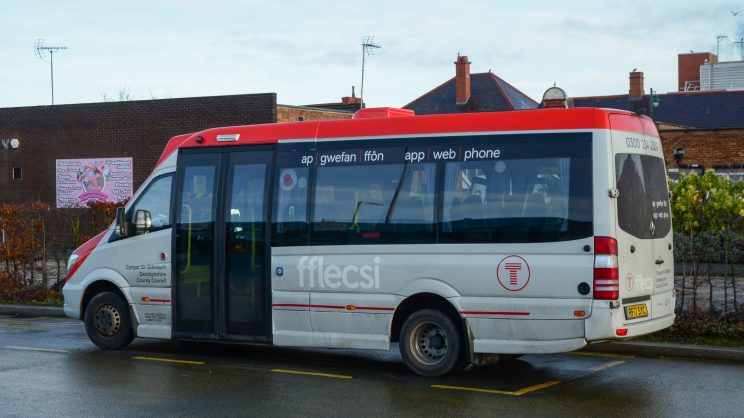
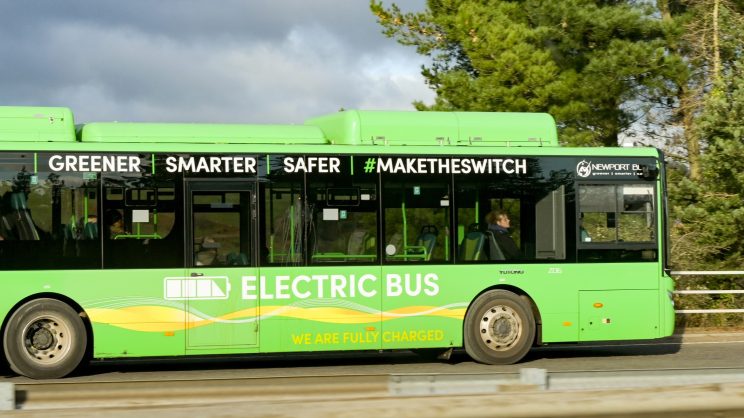
The Bus Services (Wales) Bill, introduced to the Senedd in March 2025, marks a fundamental change in how bus services are planned and delivered in Wales. It proposes replacing the deregulated model introduced by the 1985 Transport Act with a ‘re-regulated’ system, giving Welsh Ministers and Transport for Wales (TfW) the power to design and commission networks of bus services across the country.
The Welsh Government, in collaboration with Transport for Wales, asked WCPP to provide evidence on key success factors in contracting and awarding bus franchises. The research will inform the development of secondary legislation of the forthcoming Bus Bill and Transport for Wales’ ongoing work to implement bus franchising.
Our research aims to answer two overarching questions:
- In bus franchising, what practices or features of contracting and awarding show promise in achieving desired quality improvements and policy outcomes whilst delivering value for money?
- How can contracting, including incentives, help to enable: modal shift by increasing bus patronage; net zero; transport integration; and transport poverty reduction?
To examine these, WCPP hosted a series of eight evidence ‘spotlight’ sessions with Welsh Government and TfW officials between March and May 2025. These included five practice-based case studies and three policy challenge spotlights, drawing on both academic and practitioner expertise from across the UK and internationally.
We have published three key outputs from the research:
- A main report; which summarises the key findings from the spotlight sessions;
- Four expert-authored think pieces offering in-depth insights tailored to the Welsh context and;
- A collection of international case study ‘snapshots’; capturing approaches to contracting and awarding bus services and key lessons learned.
As the evidence assembled through this project demonstrates, a range of approaches to tendering and contracting bus services exists across public transport systems in the UK and internationally. Rather than replicating existing models to develop bus franchising in Wales, the evidence highlights a need for the Welsh Government and TfW to:
- Develop a uniquely Welsh approach to bus franchising drawing on international best practice;
- Facilitate a well-planned and managed transition to bus franchising which will require : 1) extensive and meaningful engagement with operators to harness their commercial knowledge and intelligence, and 2) continuing to build TfW’s competence as a bus regulator and centralised authority, with sufficient time, resources, and support to match the scale of the challenge.
- Develop a clear, collaborative bus franchising model underpinned by strong governance that is capable of continuous adaptation and improvement. Experts emphasised the importance of: (1) developing trusted partnerships with operators through continuous engagement, and (2) developing
The main expert recommendations in relation to bus franchising in the context of net zero, increasing rural mobility, and addressing transport disadvantage were to:
- Increase the attractiveness of bus travel to grow ridership and encourage modal shift to public transport.
- Establish a clear strategic vision – including goals, purpose, and principles – to guide planning and decision-making.
- Improve network design and integration to support seamless travel across conventional and nonconventional transport modes.
- Assess local conditions and user needs across groups and geographies to target resources where they are most needed.
- Ensure financial stability for operators, while including measures to improve affordability of bus services.
- Develop partnerships to overcome sector uncertainties.